
These Fermented Cranberries in Honey bring together tart cranberries and sweet honey for a homemade condiment that’s especially lovely during the holidays. With just 15 minutes of prep and 1-2 weeks of fermenting, this recipe makes about 1½ cups. It’s perfect spooned over brie, stirred into yogurt, or served alongside your favorite savory dishes.
I grew up preserving foods through canning, fermenting, and dehydrating, and those traditions are still part of my kitchen today. There’s something satisfying about taking a few simple ingredients and watching their flavor change over time.

What Are Honey-Fermented Cranberries?
Honey-fermented cranberries are made by combining prepared cranberries with raw honey and letting the natural yeasts slowly transform the mixture over a week or two. Breaking the cranberry skins lets their juices mix with the honey and get fermentation started.
As the cranberries release their juices, the honey thins out and takes on a beautiful red color. The finished result is a spoonable, sweet-tart cranberry topping in honey, rather than a thick, cooked cranberry sauce.
Ingredients
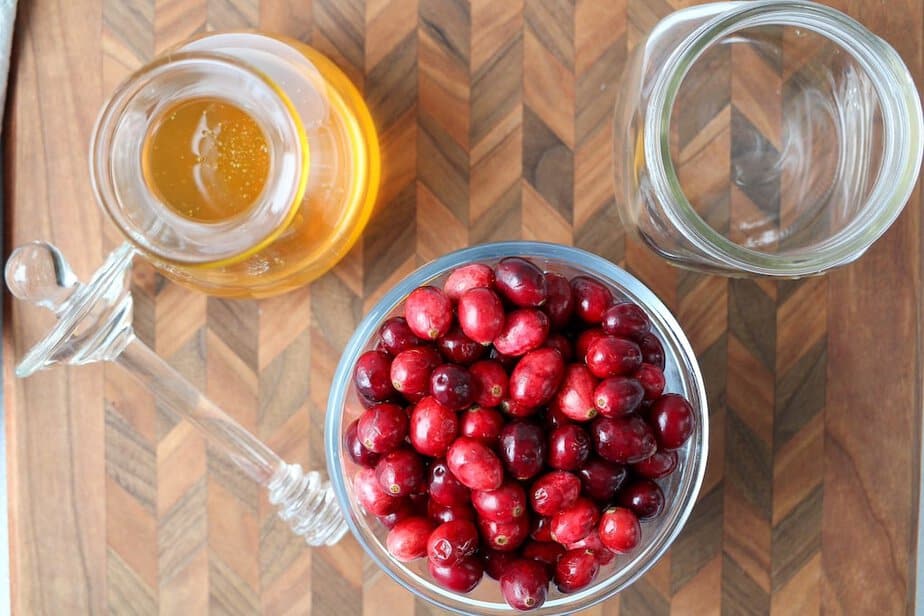
Fresh cranberries: About 1 cup for a pint-size jar. Choose firm cranberries and discard any that are damaged or soft. Rinse them under running water and drain well.
Cranberries have firm skins, so they need to be pierced or lightly broken before combining them with the honey. I prefer to prick mine with a toothpick because I like keeping the berries mostly whole. You can also lightly crush them with a potato masher or give them a few quick pulses in a food processor. The goal is to break the skins without turning the cranberries into a puree.
Raw honey: Enough to fully cover the cranberries, about 1 1/2 cups for a pint jar. Raw honey contains natural wild yeasts that help start fermentation, so pasteurized honey may not ferment as readily. Choose a honey you enjoy, since its flavor will come through in the finished cranberries. The honey becomes part of the topping, so be sure to enjoy it along with the fruit!
Equipment
- A clean, food-safe glass jar (a pint-size mason jar works well) with at least 1 inch of headspace
- A lid. If using a metal lid, place a piece of parchment paper between the lid and the jar, since metal can react with the acidic ferment.
- A toothpick, knife, potato masher, or food processor to break the cranberry skins
- A clean spoon for tasting
- A small plate to set the jar on, in case the honey bubbles up and seeps out.
How to Make Honey-Fermented Cranberries
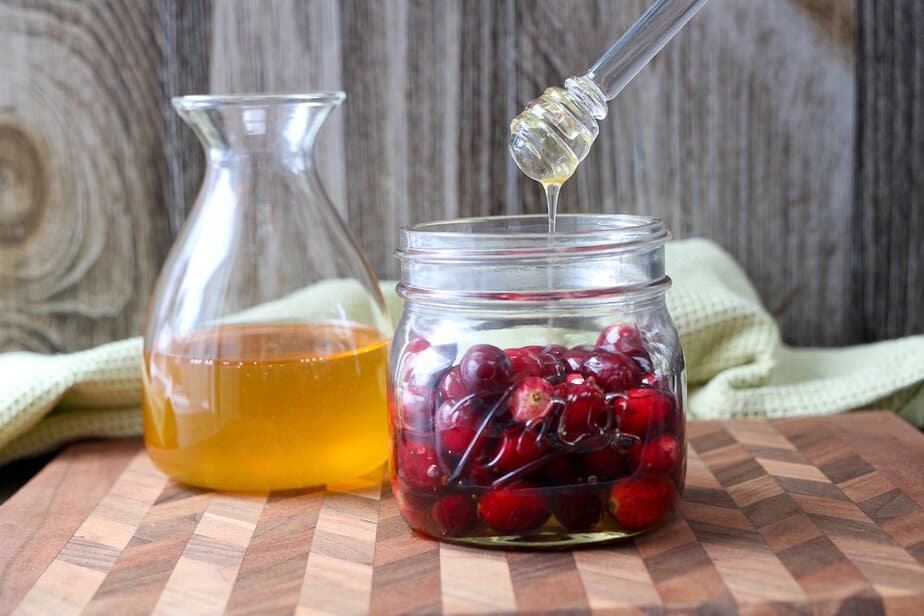
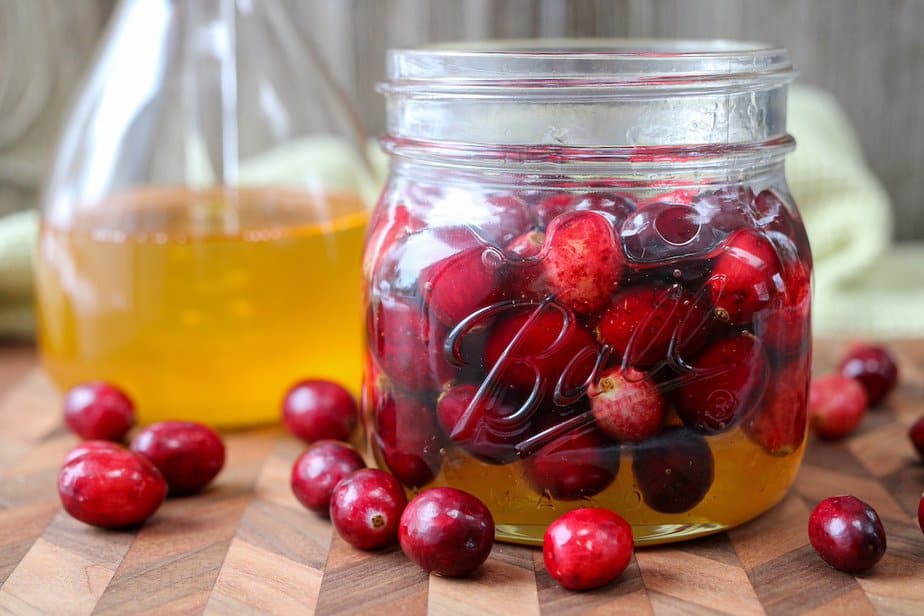

- Prepare the cranberries: Lightly break the skins by pricking with a toothpick or knife, gently crushing with a potato masher, or giving them a couple of pulses in a food processor. I prefer a few pricks with a toothpick so they stay mostly whole.
- Add the honey: Place the cranberries in a clean jar. Slowly pour the honey over them, letting it settle into the spaces between the berries. Add more honey as needed until the cranberries are covered.
- Coat the cranberries: Tighten the lid (lined with parchment if it’s metal) and gently turn the jar over a couple of times to coat all the cranberries with honey.
- Loosen the lid: Set the jar upright on a small plate and loosen the lid so gas can escape as fermentation builds pressure.
- Ferment: Leave the jar at room temperature, out of direct sunlight, for 1–2 weeks. Once a day, tighten the lid, gently turn the jar to recoat the berries, then set it upright and loosen the lid again.
- Taste: Start tasting after one week with a clean spoon, then every day or two until you like the flavor. I prefer mine at about 1½ weeks.
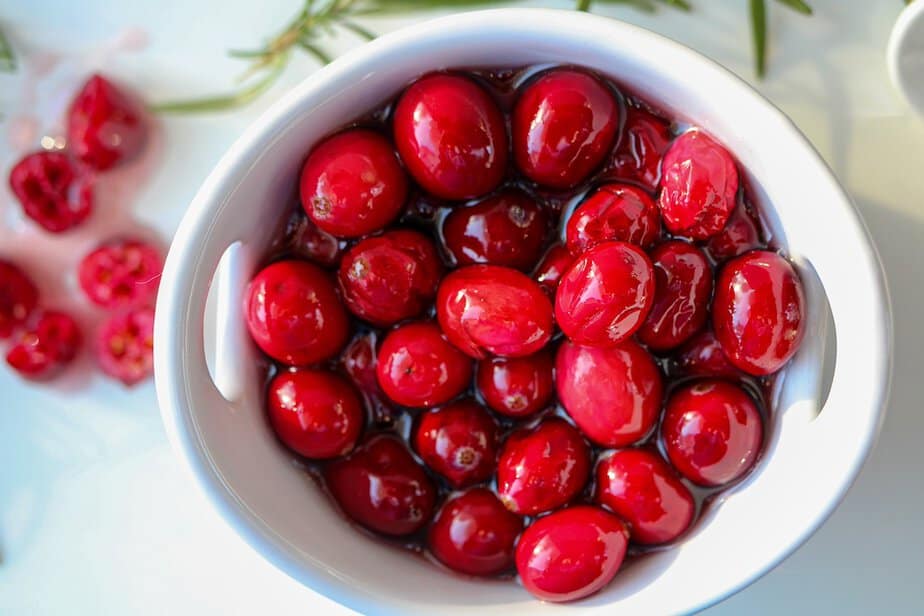
The finished cranberries will have a delightfully sweet and tart flavor, and the honey will turn a beautiful red.

Storage
Once the cranberries taste the way you like, move the jar to the refrigerator. The cold slows fermentation significantly, keeping the flavor close to where you want it. Store them in the refrigerator for 1–2 months, and always use a clean spoon when serving.

Would you like to save this?
Safety Notes
- Not for infants: Honey should not be given to children under 12 months old, including in fermented foods.
- Keep the berries coated: Turning the jar daily keeps the fruit covered in honey, which helps discourage mold.
- Check acidity if you like: Cranberries are naturally very acidic, which makes this a lower-risk ferment. For extra reassurance, test your batch with pH strips at about one week. A reading below 4.6 is the commonly used safety threshold.
- When to discard: Throw the batch out if you see fuzzy mold, notice a slimy texture, or smell anything rotten or off. Tiny bubbles and a pleasantly tangy, slightly yeasty smell are normal.
Fermented Foods and Gut Health
Fermenting foods is something I grew up with, and it’s still part of my kitchen routine today. As a registered nurse who also completed a Nutrition & Coaching Certification through the Food Matters Institute, I’m interested in how the foods we eat fit into our overall health, including gut health.
Research on fermented foods is promising. A small study from Stanford Medicine found that adults who ate a diet rich in fermented foods had greater gut microbiome diversity and lower levels of several inflammatory markers. The study included foods such as yogurt, kefir, kimchi, and kombucha, not honey-fermented cranberries specifically.
It’s also helpful to know that fermented foods are not automatically probiotics. That term refers to live microorganisms with demonstrated health benefits, and a homemade ferment may not contain the specific microorganisms or amounts needed to make that claim.
I enjoy these cranberries for their sweet and tart flavor and as another way to bring variety to our meals. If you enjoy making fermented foods at home, you might also like my Homemade Sauerkraut with Garlic.
Variations
I love the simplicity of this two-ingredient recipe, but it’s easy to customize:
- Warm spice: Add a cinnamon stick and a strip of orange zest.
- Savory: Add a few garlic cloves and fresh herbs like rosemary or thyme. Garlic lowers the overall acidity of the jar, so I recommend checking this version with pH strips.
Ways to Use Fermented Honey Cranberries
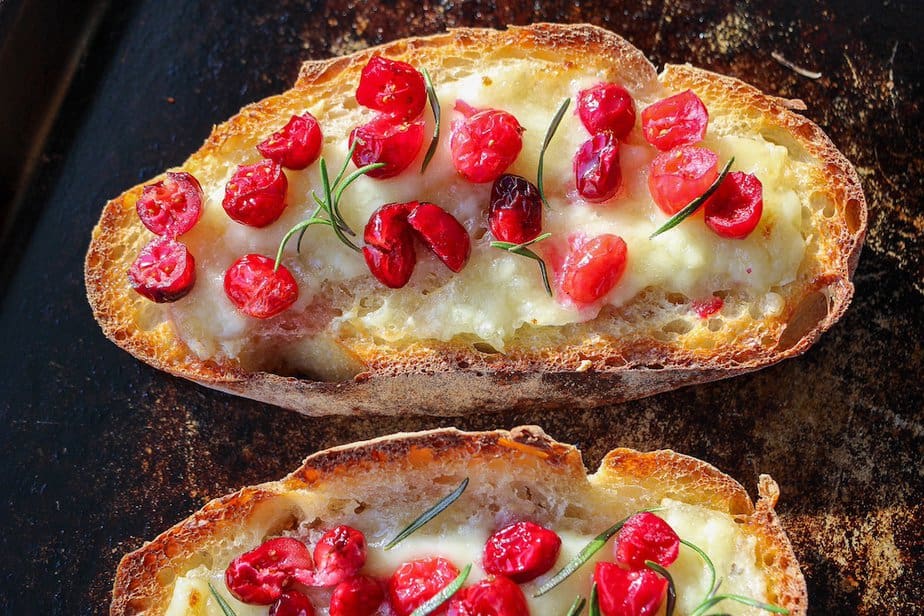
There are plenty of ways to enjoy both the cranberries and their honey!
- Sourdough toast with brie: This is my favorite. Top a slice of my Soft Sourdough Bread with melted brie, spoon the cranberries over the cheese, and finish with a drizzle of the cranberry honey. It makes a simple holiday appetizer or a delicious afternoon snack. Don’t want to both with Sourdough? Try this Italian Bread in the Bread Machine that prepares the dough in the bread machine but bakes in the oven.
- Yogurt: Spoon a small amount over plain yogurt for a sweet and tart topping. Add a sprinkle of granola for a little crunch.
- Salads: Toss the cranberries into a salad with goat cheese, greens, and toasted nuts. A little of the cranberry honey adds sweetness to your dressing.
- Cheese boards: Serve a small bowl alongside brie, goat cheese, crackers, and sliced bread. The red cranberries make a beautiful addition to a holiday board.
- Holiday meals: Serve them with roast turkey, pork tenderloin, or glazed ham, or set them out next to traditional cranberry sauce for something a little different.
Frequently Asked Questions
Yes. Cranberries have firm skins, and piercing or lightly crushing them lets their juices mix with the honey. I like to prick mine with a toothpick to keep them mostly whole.
Within a few days you’ll see tiny bubbles, and the honey will start to thin and turn red. Wild yeasts feed on the natural sugars in the honey and fruit, releasing carbon dioxide as those bubbles.
Raw honey works best because it contains the natural yeasts that start fermentation. Pasteurized honey may not ferment as readily.
They have a different texture. Traditional cranberry sauce is cooked and thickens as it cools. These cranberries stay as whole or broken pieces of fruit surrounded by honey.
Absolutely! Spoon a little of the cranberry honey over toast, yogurt, or cheese along with the berries.
Stored in the refrigerator, they keep for 1–2 months. Discard them if you see mold or notice an off smell.
Here are a few other cranberry recipes you might like to try: Cranberry Orange Nut Bread, and this classic Cranberry Relish recipe.
For another fermented food recipe, try this Homemade Sauerkraut with Garlic which is a favorite in our house.
This post may contain affiliate links by which I may receive a small commission. All product links are items I personally use in my kitchen.
If you make this recipe I would love it if you left a review below and tag me on Instagram!
Fermented Cranberries in Honey
Equipment
- 1 Pint-size Mason Jar with lid
- Toothpick, knife, potato masher, or food processor to break the cranberry skins
- Spoon for tasting
- Small plate to set the jar on, in case the honey bubbles up and seeps out
- Parchment Paper if using metal lid
- ph strips optional
Ingredients
- 1 cup fresh cranberries rinsed
- 1½ cups raw honey possibly a little more to cover cranberries
Instructions
- Lightly break the skins by pricking with a toothpick or knife, gently crushing with a potato masher, or giving them a couple of pulses in a food processor. I prep a few pricks with a toothpick so that the cranberries remain mostly whole.
- Place cranberries in a clean jar. Slowly pour the honey over the berries, allowing the honey seep through each berry. As the honey settles, add more honey to ensure the cranberries are covered.
- Tighten the lid (lined with parchment paper if the lid is metal) and gently turn the jar over a couple of times to coat all the cranberries with the honey.
- Set the jar upright on a small plate and loosen the so gas can escape as fermentation builds pressure.
- Leave the jar at room temperature, out of direct sunlight, for 1-2 weeks. Once a day, tighten the lid, gently turn the jar to recoat the cranberries, then set the jar upright and loosen the lid again.
- Start tasting after one week with a clean spoon, then every day or two until you like the flavor. I prefer mine at about 1½ weeks.
- Enjoy!